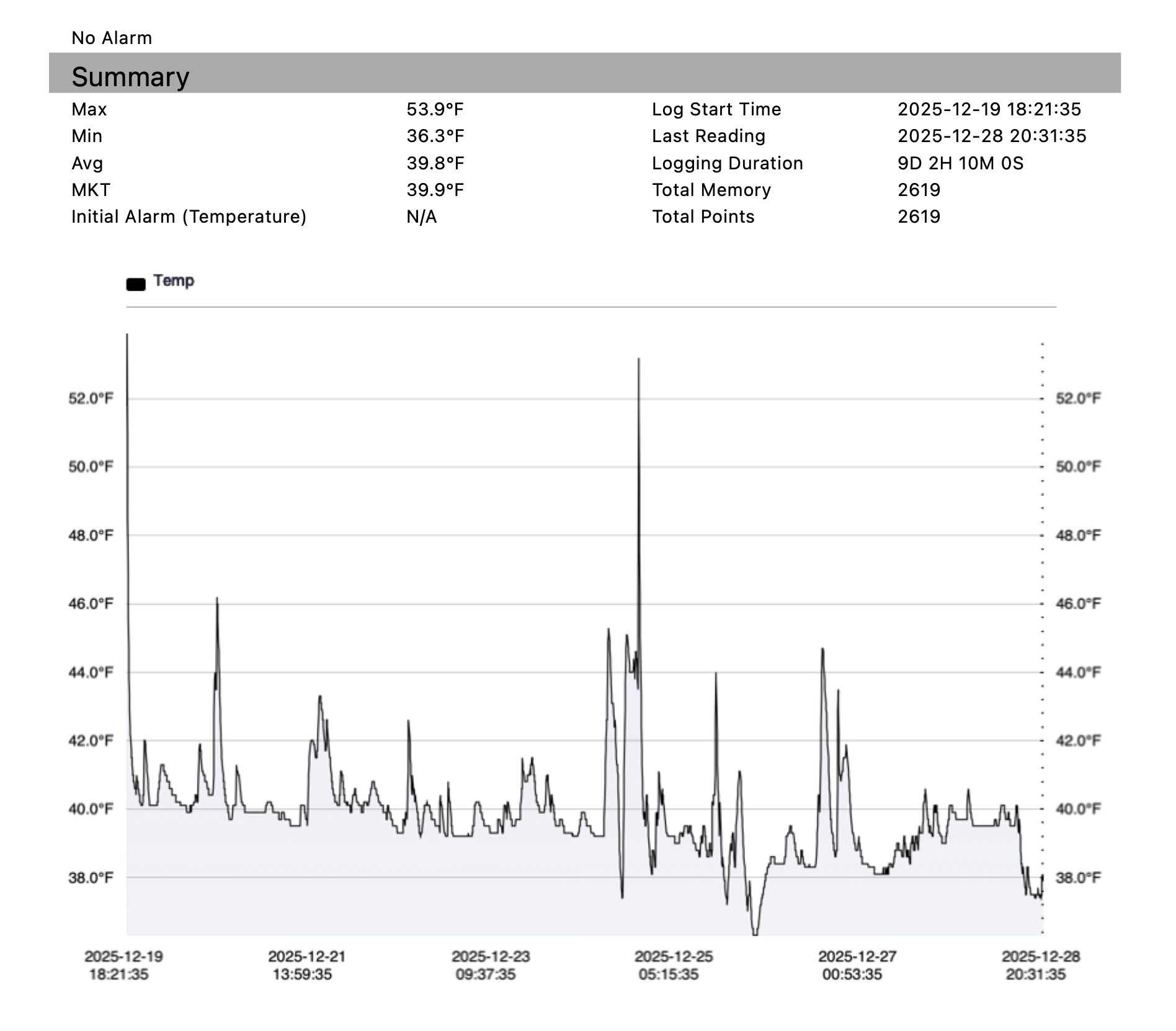
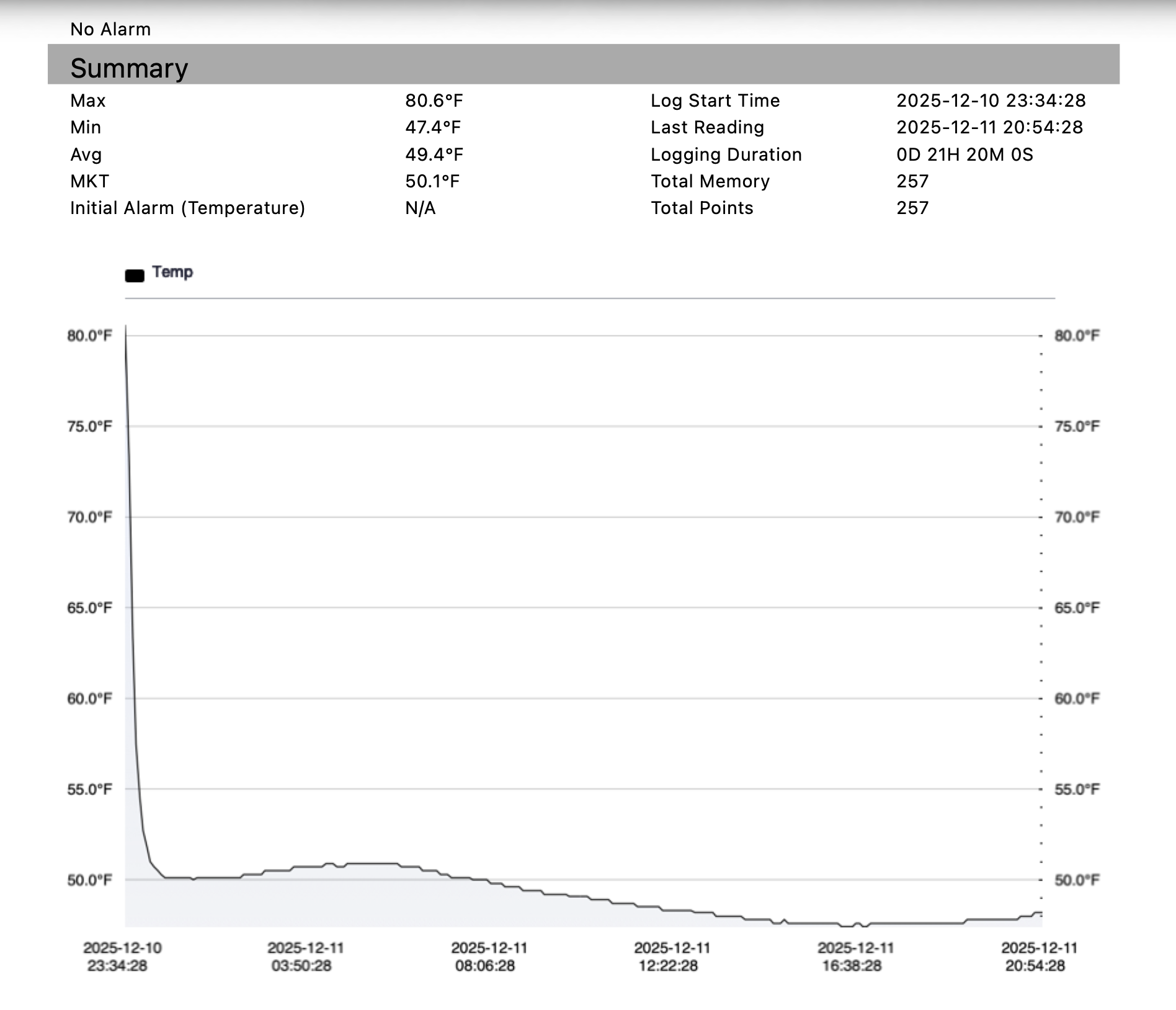
I’ve been on Lantus (Insulin, long-acting) and Mounjaro (GLP-1 RA) since September 2025, just now crossing the half year mark. I have been shopping on Amazon for various related supplies for just about as long and one thing I found early on was someone testing a cooler with an Elitech Temperature logger, a USB device with a calibrated temperature sensor inside that runs for months at a time dutifully monitoring the exact temperature of their environment.
Temperature is ridiculously important to these drugs. Proteins generally, including those in your body, change shape and behavior based on temperature. In the case of insulin it starts to degrade at 8C or 46F. Both can be kept out of refrigeration under dry, cool conditions like a medicine drawer (not in your bathroom or sauna). Both begin to denature around 25C (77F) and stop working as active ingredients whether returned to temperature range or not. Even at a cool dry 68F 20C after a month either drug is considered to have lost enough effect for the included instructions to tell you to dispose of them.
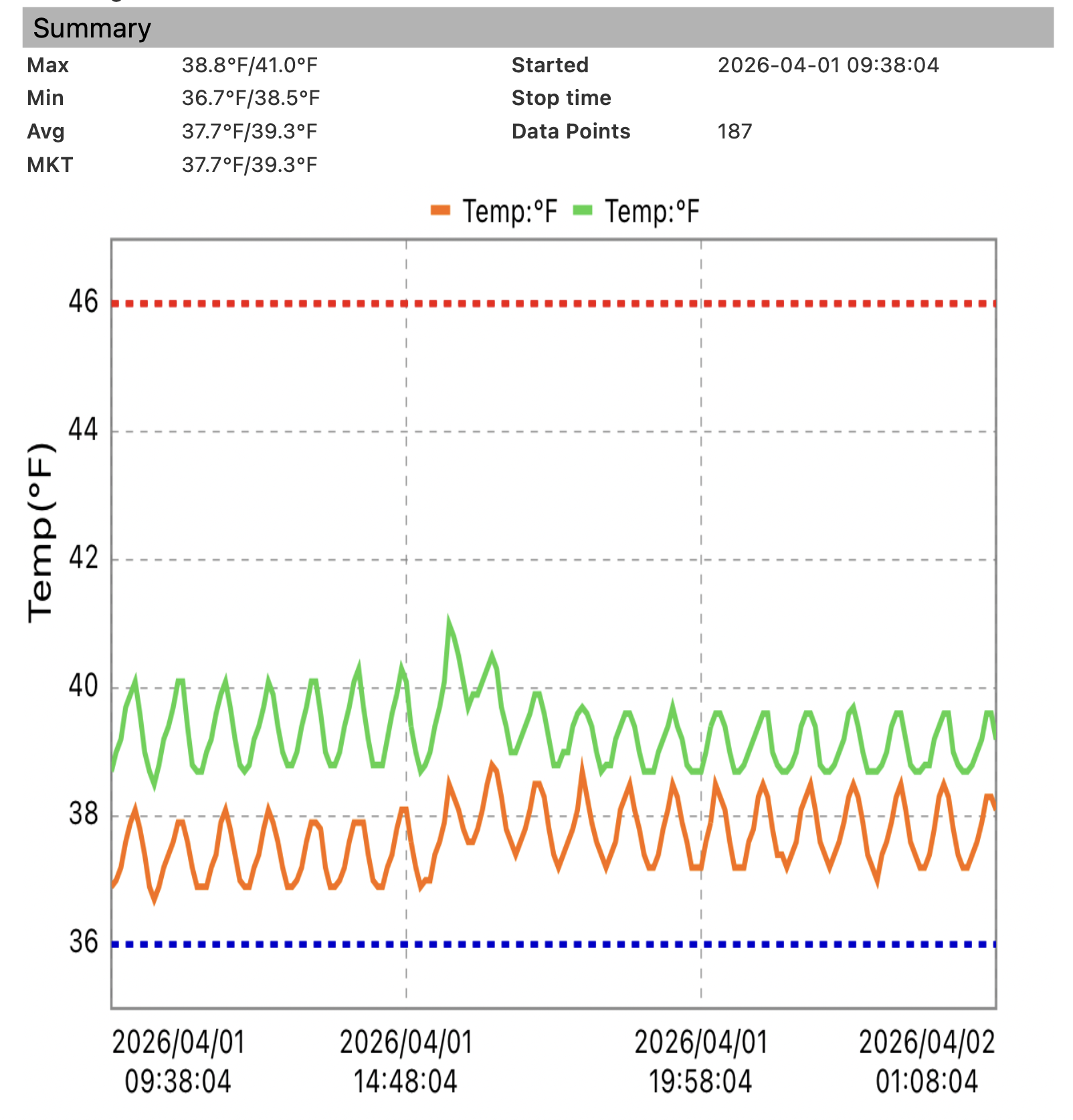
Our fridge at home is busy. We don’t eat out much, instead there’s always something cooling down or thawing out. Including right next to my medicine. At first, I tried using a TEC or peltier type micro-fridge which wastes too much power, but I learned it doesn’t get cold enough or stay in range even if it managed a minute in range. Both the insulin and Mounjaro call for 36F-46F (2C-8C). Our regular compressor-driven fridge is perfectly capable of holding this range if it weren’t necessary to use it for food.
So I got a mini fridge. Not just any mini fridge, a compressor-driven mini fridge with a freezer unit on top and adjustable thermostat in the bottom. The compressor because the COP score, or coefficient of performance, is 1.5-2 — meaning for every watt of input power, 1.5-2 watts of heat are moved out of the fridge. The Peltier manages a COP of 0.2-0.4, meaning most of the electricity becomes waste heat inside the device you’re trying to cool. And a mini fridge with a freezer on top for another more involved reason: I can’t afford phase-change materials.
Phase-change materials are specially engineered solids which melt at a selected temperature and absorb a lot of heat during the phase change from solid to liquid, staving off a temperature rise even as heat is dumped into them. You can buy this material, but containers are aimed at live organ transport or pharma grade fridge production and are very costly.
The trick these PCM materials pull off is expensive to replicate above 0C, but very cheap below. So cheap we literally scatter it to the four winds any time it snows. Salt, whether sodium chloride or even more effective alternatives, can be added to water to lower its melting point. Since my compressor fridge can freeze water, I know there’s a phase change point I can push lower than just freezing water. So with sufficiently robust containers I can not only have the latent heat effect prevent the temperature from rising in the fridge, I can make sure the mechanism takes effect immediately rather than delayed until 0C.
A camping battery I already owned operates as a UPS, allowing the fridge to continue for a day or more before needing to be recharged by a gas generator I keep well maintained & quarterly tested.
The adjustable thermostat in the lower fridge compartment under the freezer and the quality-assurance tested and calibrated temperature logger combine with the thermal mass of the frozen salt water added to the freezer and fridge to prove out a final-step cold chain.
One final improvement will be a separately & redundantly powered microcontroller which can monitor the temperature and beep or flash and send an alert to my phone if the temperature near or in the box of medicine leaves range.
Before trusting any of this with real medication, I killed the power and timed how long the fridge held range on battery alone. [TODO: insert your actual test numbers here — time to reach 8C, battery remaining, etc.]
The cost?
- Magic Chef mint green retro mini fridge/freezer - $205
- Anker Solix C1000 solar “camping” battery - $470
- Westinghouse 1500 watt gas generator - $350
- Elitech RC-5 - $17
- monitoring charger, battery, microcontroller, temp probe, beeper, led - ~ $100
total ~ $1,050: That is ONE box of Mounjaro or Zepbound at full retail.
My supply grows over time. I extend each dose from 7 days to 9, banking an extra pen per box. I’m sitting on 7 pens right now between refills, and the buffer keeps building. That growing stockpile is exactly why the cold chain matters — the more you store, the more you stand to lose in a single power outage.
For me, a lost pen is a \(9 copay. Annoying, not devastating. But for someone paying cash through Lilly Direct — \)250-500 per box of vials, more for pens — a failed fridge during a July storm could cost more than this entire setup. Under those circumstances my project here goes from a silly over-engineering of a solution to a non-problem to a brilliant fix to a real threat and responsibility. I’m covered for a type 2 diagnosis, which means I should still have access if I ever lost my job and qualified for Medicaid.
But perhaps like me one of your family members or friends wants to private pay for the drug, and for them, $1,050 in equipment that pays for itself on the first saved box is not over-engineering. It’s common sense.